


When we were contacted in early August by a television producer who wanted to film a report on vintage sardines and needed our help, I had no idea that just under two months later, with rubber boots on my feet and a light green surgical cap on my head, I would be gutting and cleaning sardines by hand, and shortly thereafter, fearlessly venturing out on a small boat in two-meter-high waves to go sardine fishing in the dark of night ... But life holds so many beautiful surprises in store. Let's start at the beginning:
With our help, Daniel Mohr's team (Kabel 1 – "Abenteuer Leben" editorial team) was able to arrange an appointment at the Conserverie Gonidec in Concarneau. We source our fantastic sardines and vintage sardines "Les Mouettes d'Arvor" from there. The company was founded in 1959 by Jacques Gonidec, I. Since 1996, the so-called vintage sardines have been produced here under the brand "Les Mouettes d'Arvor", a defunct local football club that belonged to Jacques Gonidec, II. It is now run by Jacques Gonidec, III. We already knew him and his wife Valérie from a trade fair, but we had not yet managed to make it to Concarneau ourselves to visit them at their place of work. I therefore very selflessly offered Daniel my services as an intermediary and translator, and that is how I was able to accompany the team.
Two days before departure, they arranged a visit to the shop for us, so we could film some initial scenes there. Some of our Berlin customers may still remember the LED lamps, the unusual equipment, the many cables and the strange men in the shop ...
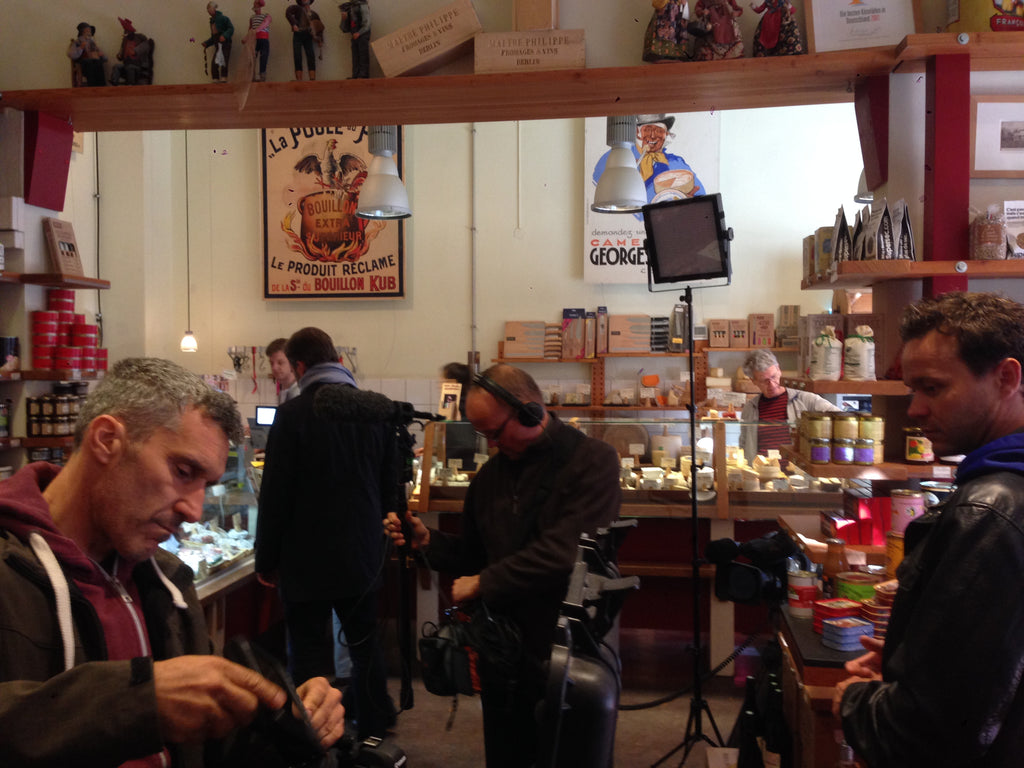
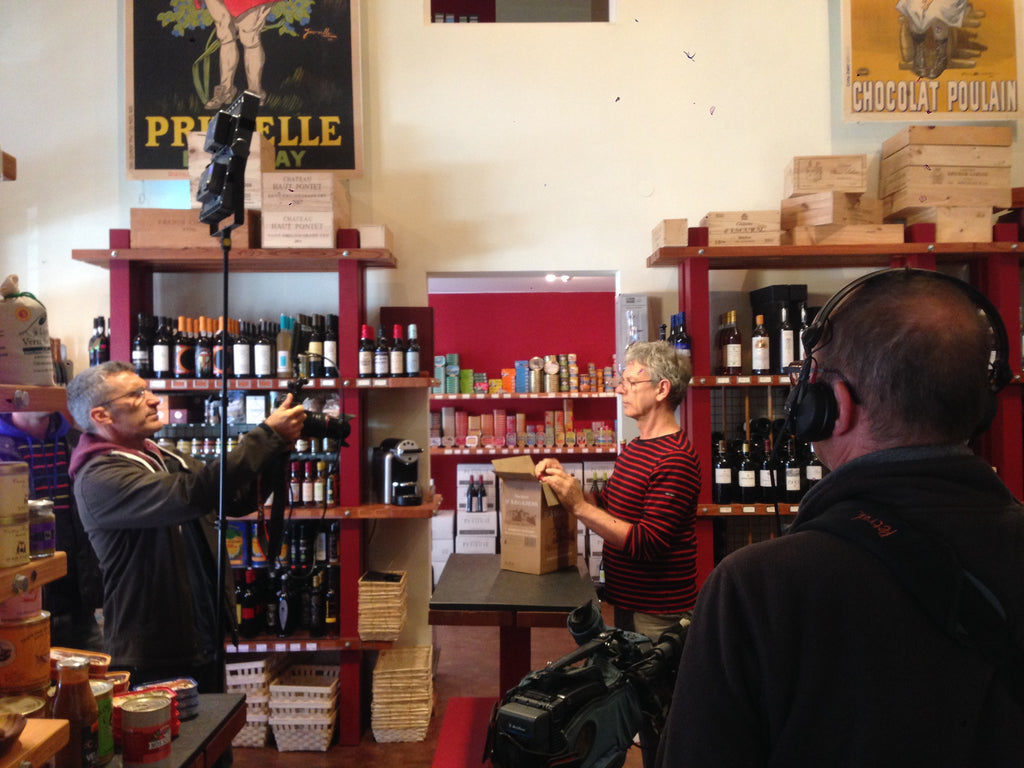
And then we set off: I met the "boys" (Daniel Mohr, editorial / Matthias Barth, camera / Roland Röhrig, sound) at the Paris airport. From there, we continued our journey to Brest, and the next morning by rental car to Concarneau. It was my first visit to Brittany, and accordingly, I was also excited.
In Concarneau, we visited Jacques Gonidec at his cannery and were personally guided through the hallowed halls by the host, so we could get a first impression.
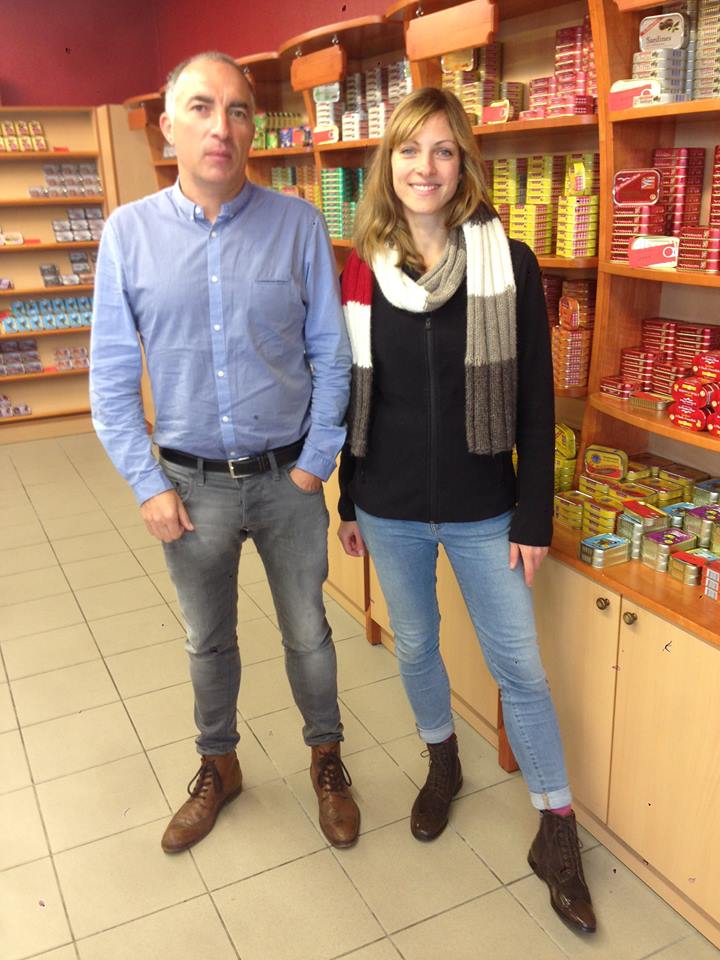
But things really got going the next morning. The planned sea trip for this first evening with a sardine boat had to be postponed due to bad weather – storm with strong gusts, waves up to 3 meters high and rain – at first.
And so we stood there the next morning, relatively well-rested and on time at 8 a.m., ready to throw on our appropriate outfit for the occasion and accompany the production process of the vintage sardine from start to finish.
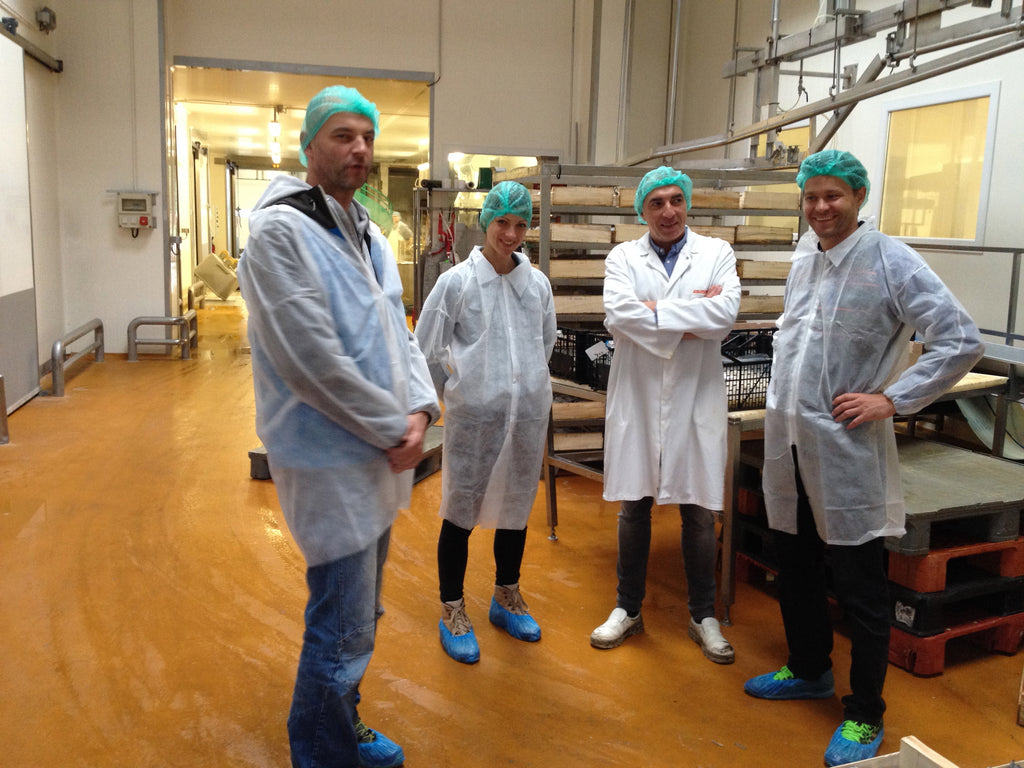
It begins with the delivery of the sardines, which were caught in the preceding night off Concarneau or one of the other nearby cities (Lorient, Brest, Quiberon).

In the cannery, they are first washed and then brought into the so-called "Dirty Room". There, the workers remove the heads and guts from the fish by hand and with a sharp knife. The movements are practiced and everything happens so quickly that you almost don't notice what is really happening. I was also allowed to try it myself and had to conclude that it is not that easy. Because it depends on making a quick and precise cut through the middle gills, so to speak in the neck, and then, without lifting the knife, pulling the guts out of the belly with a determined stroke. It is absolutely essential not to cut the guts and, above all, to remove everything, because the guts are not easily digestible for the human organism. In cheaper products, machines perform this task, and they often fail to be as thorough, careful and gentle as the experienced workers. This explains, among other things, why hand-processed sardines taste so much better. My first two attempts fail rather miserably and elicit the comment from Monsieur Gonidec that I must treat the sardine with more respect. He shows me how carefully I have to handle the fish and, above all, where: the thumb must be placed just below the gills, and the remaining fingers may only gently enclose the sardine. This actually works better, and the third sardine I gutted manages to make it into the row of those that move on to the next step.
Next, the sardines are washed again in salt water, or rather soaked for approx. 3 minutes. Then they are dried in a special drying facility at 57°C. Through these two work steps, which are part of the "à l'Ancienne" preparation, a thin salt crust forms around the sardine, which becomes nicely crispy when subsequently fried in 100°C hot sunflower oil. Much more important, however, is that this crispy skin protects the sardine from drying out, because under the skin there is a thin layer of fat that – if it remains intact – ensures that the sardine is nice and juicy and therefore aromatic. This is also a step that fewer and fewer canneries still perform. This does save production costs, but their products lose significantly in quality and taste.
After the sardines are fried, they are hung up for at least 2 hours, so that the sunflower oil and the good olive oil do not mix later.

In the next, much cooler production room next door, things continue after the lunch break. When we return from our lunch break with Monsieur and Madame Gonidec (at "La Coquille", a very nice and popular restaurant at the port of Concarneau, where the Gonidecs are greeted with kisses), the hardworking workers are already back at the conveyor belt.
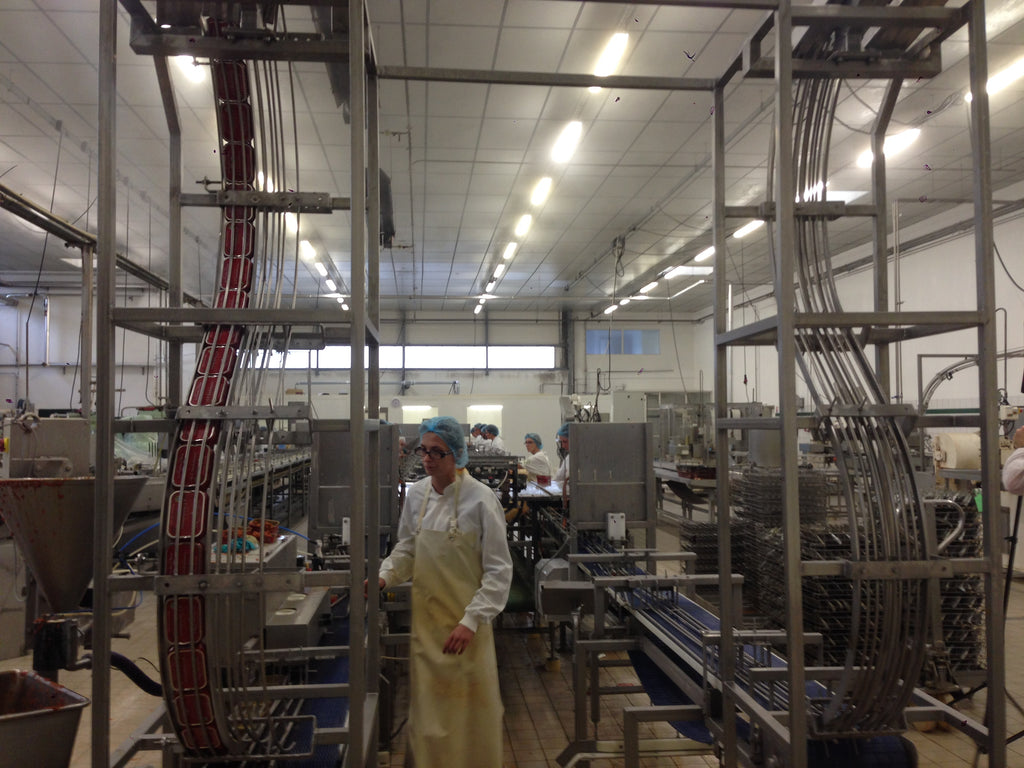
Today, a special edition is being produced: the vintage sardines of the special collector's series "Brest 2016". A really beautiful can that we will surely order too, when the time comes.
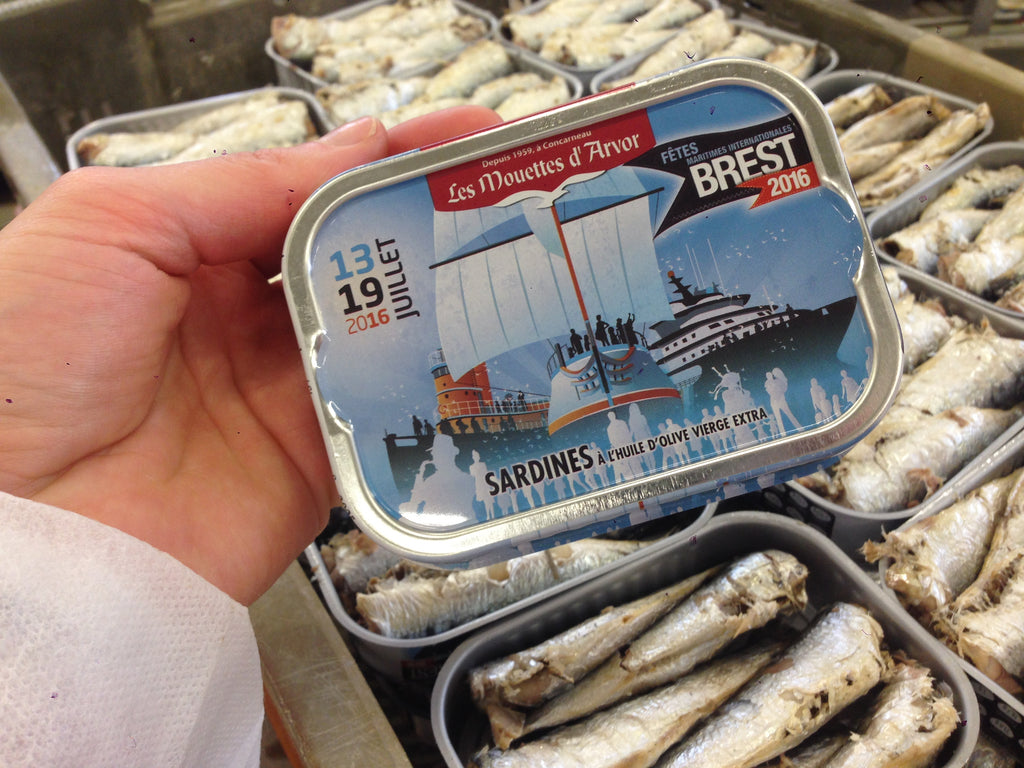
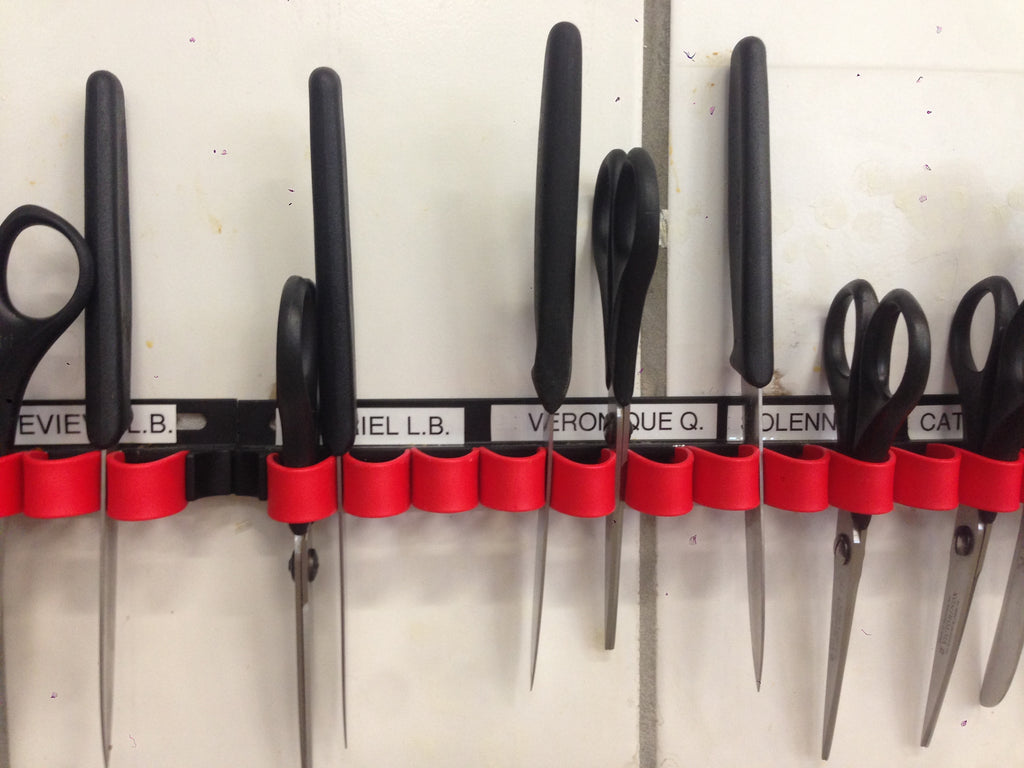
Now the sardines are trimmed again, this time with scissors, again by hand. A little bit of the tail and the head end still needs to be removed. On the one hand, so that the sardines fit exactly in the can, on the other hand, to obtain a really clean and flawless product. Then the cans are filled with the finest cold-pressed olive oil before they are fitted with lids and then sterilized in a special facility for one hour and 40 minutes at 120°C.
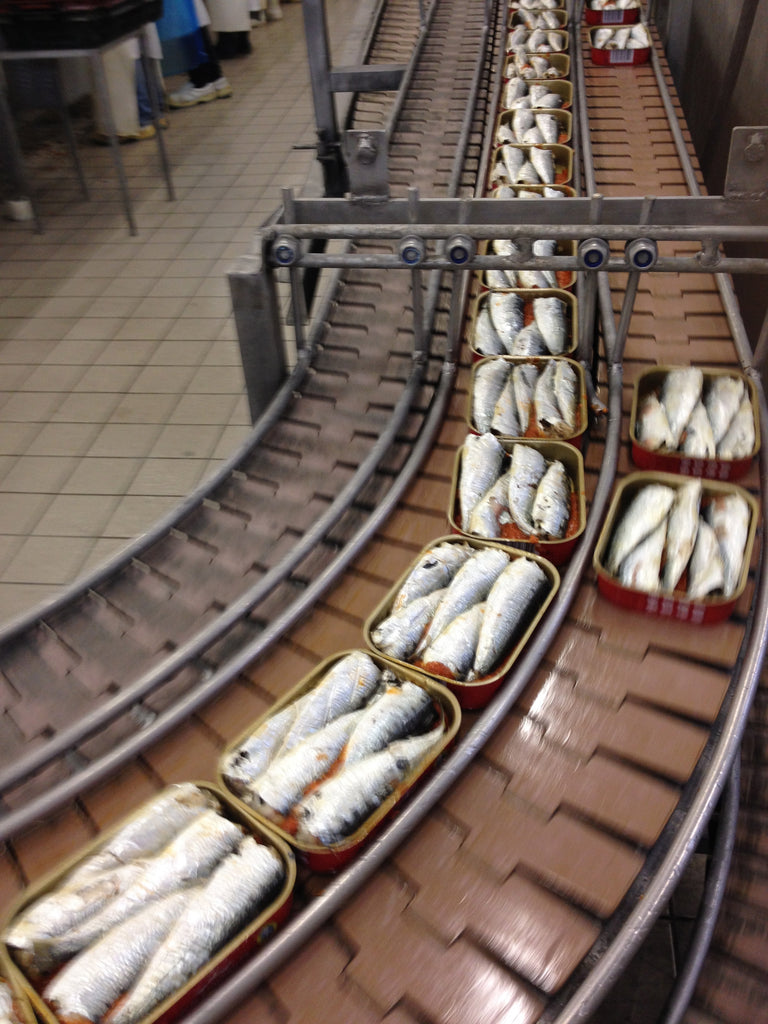
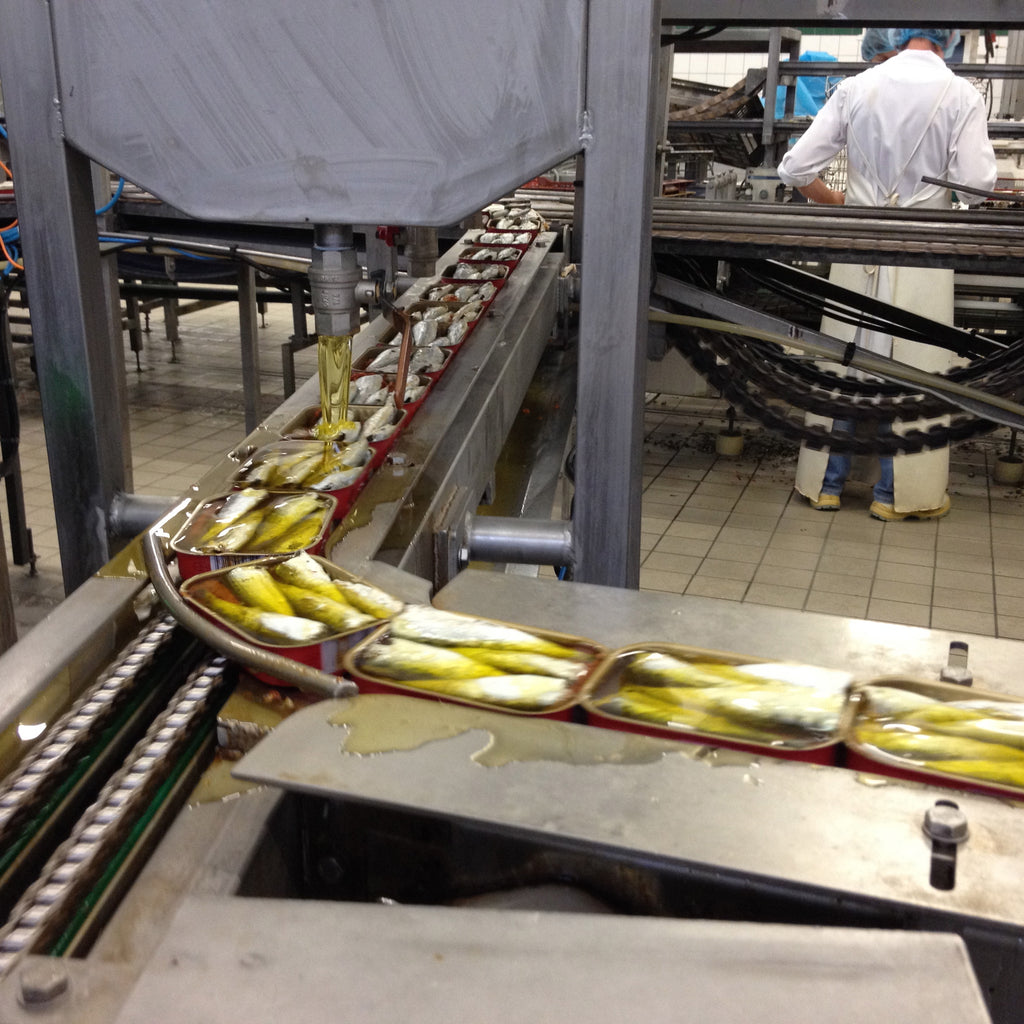
We absorb all the information eagerly and curiously, interview the workers, take photos and marvel at the ingenuity of the facilities and the dexterity of the ladies on the conveyor belt. Many of them have been working in the factory for 18 or 20 years already and started under Monsieur Gonidec's father. I can really hardly imagine that, because it really quickly becomes clear to you that this is a back-breaking job ...
Unfortunately, but also the whole day long, there was the fearful hunch that it wouldn't work out again this time, to accompany a sardine boat on its nightly catch, because the weather situation had actually worsened again and once again no captain wanted to take us with him. In hindsight, I must admit that I am quite happy about it, now that I know how much a ship rocks even with less swell ...
We therefore had to slowly come to terms with the idea that we probably wouldn't experience this stage of the vintage sardine journey live anymore and went to bed a little deflated.
But overnight the storm subsided and so we received a call from Monsieur Gonidec as we were already on our way to the airport: he had found a captain who would go out in the evening and would also be willing to take us on board. We allowed ourselves a short celebration break, then the soundman hit the brakes and made a U-turn. Daniel quickly made a few calls to extend our trip by one day at short notice and finally we programmed our lisping GPS to Lorient. Because there we would meet Pierrot le Pluhart in the evening, the captain of the sardine boat "L'Étoile Polaire" – the North Star.
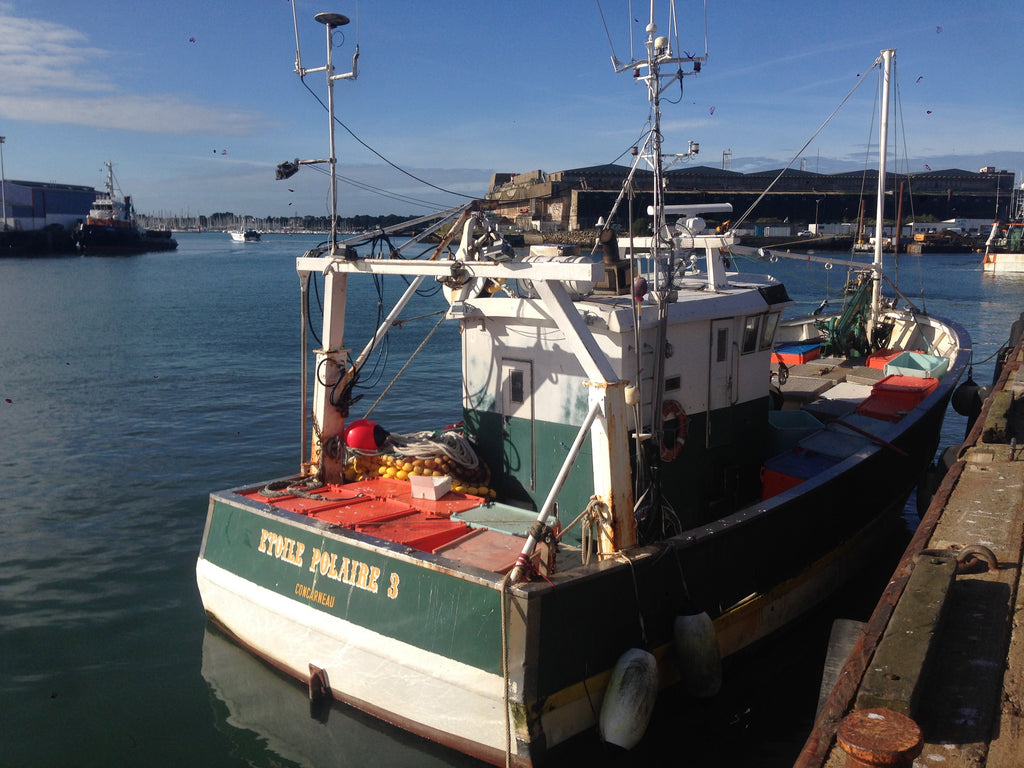
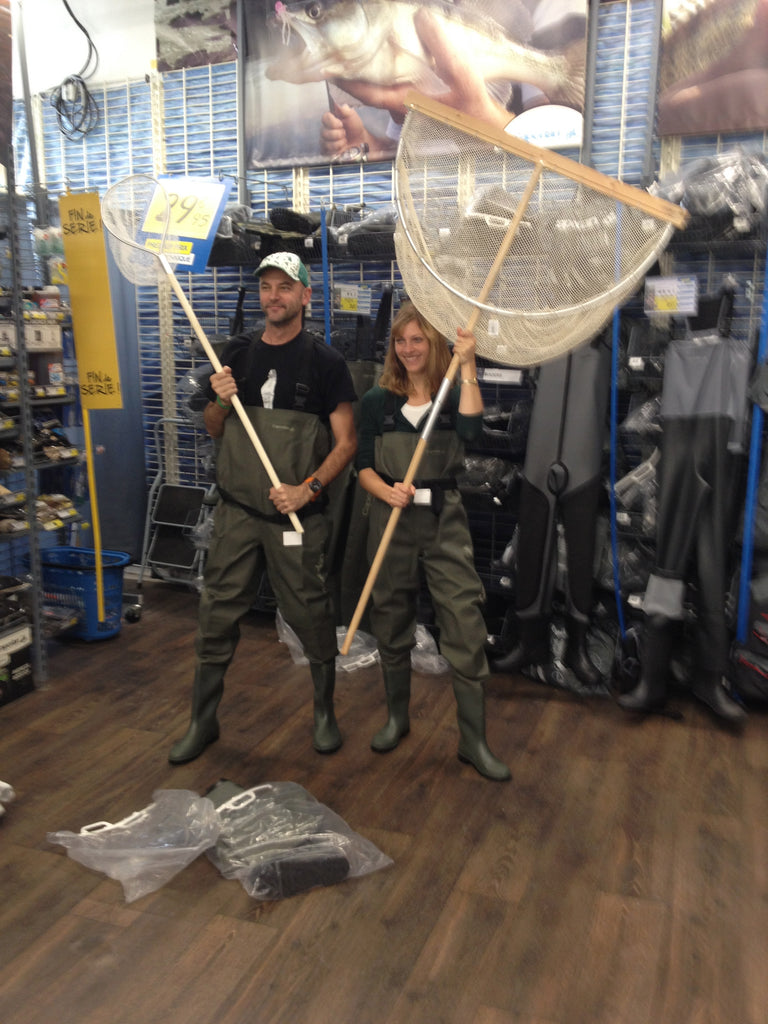
When it was finally time, I could hardly believe it. After two days of waiting with an uncertain outcome, I stood at the port in my fishing outfit, equipped with dry bread and travel chewing gum, when Pierrot and his boys arrived.
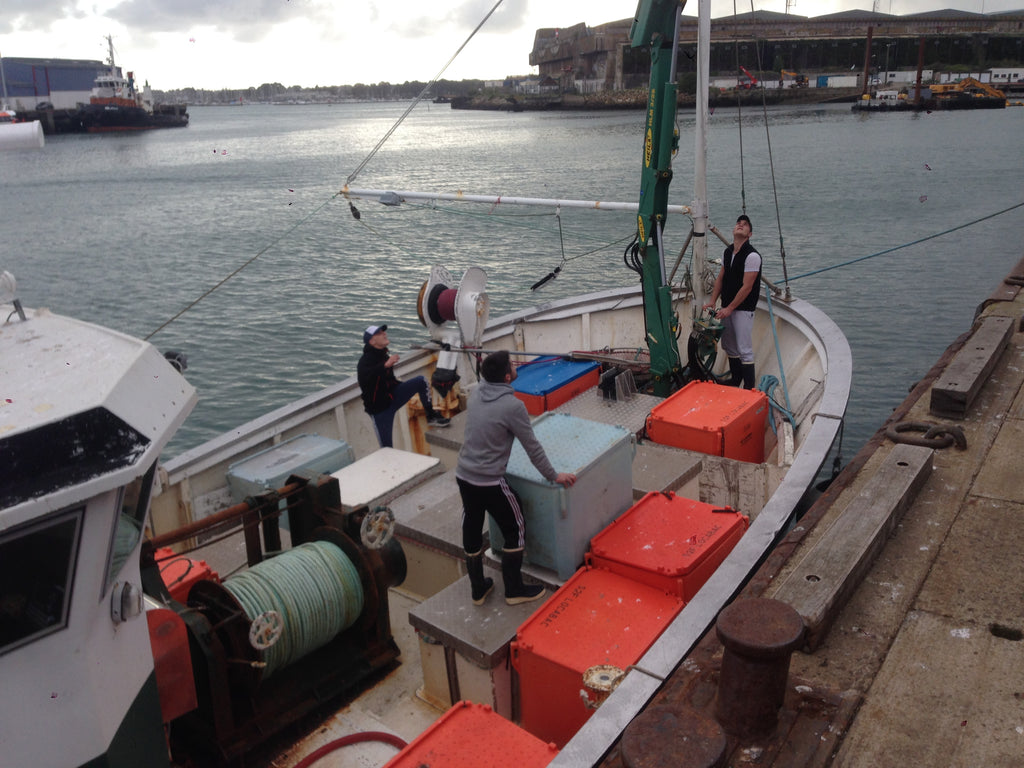
Pierrot is 61 years old and has been going to sea since 1968. Actually, he has been retired for 5 years now, but he simply cannot stay on land. Now he has firmly resolved to quit within the coming year, but after I got to know him a little, I am not so sure whether he will really make this plan a reality. To my question about what his wife says about him going out every evening, he only said: "She knows that I love it. So she has nothing against it."
The 8-person crew around Pierrot is strikingly young, all are in their early to mid-twenties and highly motivated. He gathered his boys together about 3 years ago and is very satisfied with them. He has known some of them since they were little boys, because their fathers were also fishermen and partly went to sea with Pierrot. The crew is perfectly coordinated. When things get serious, every movement is precise and communication works even with a few words.
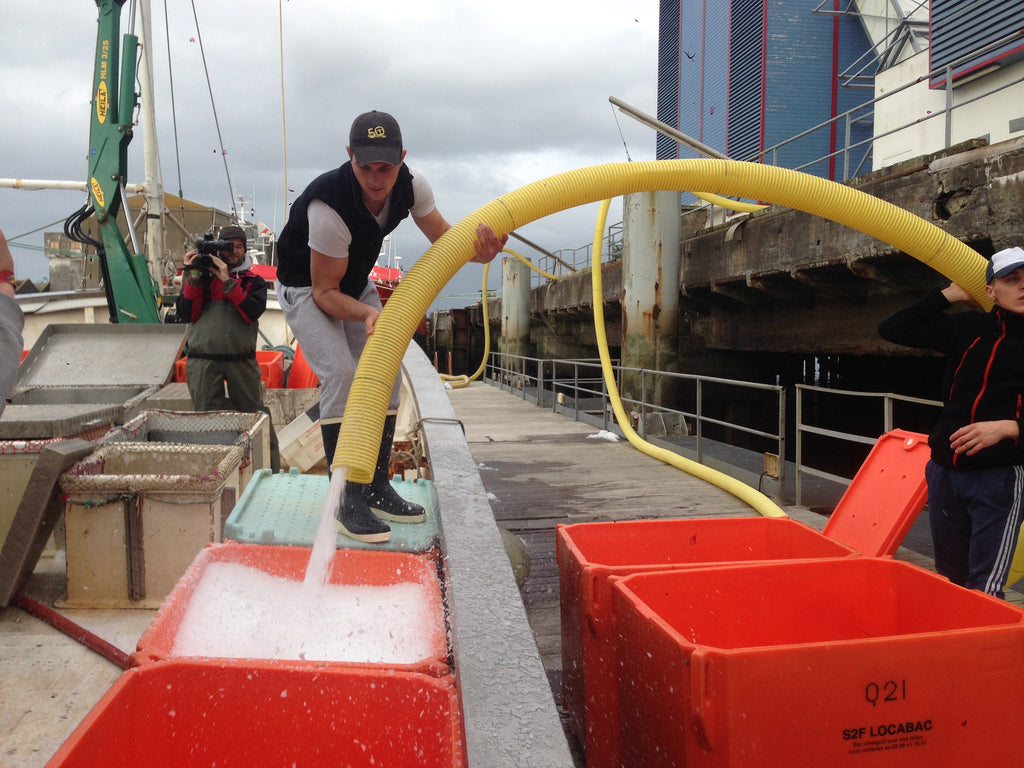
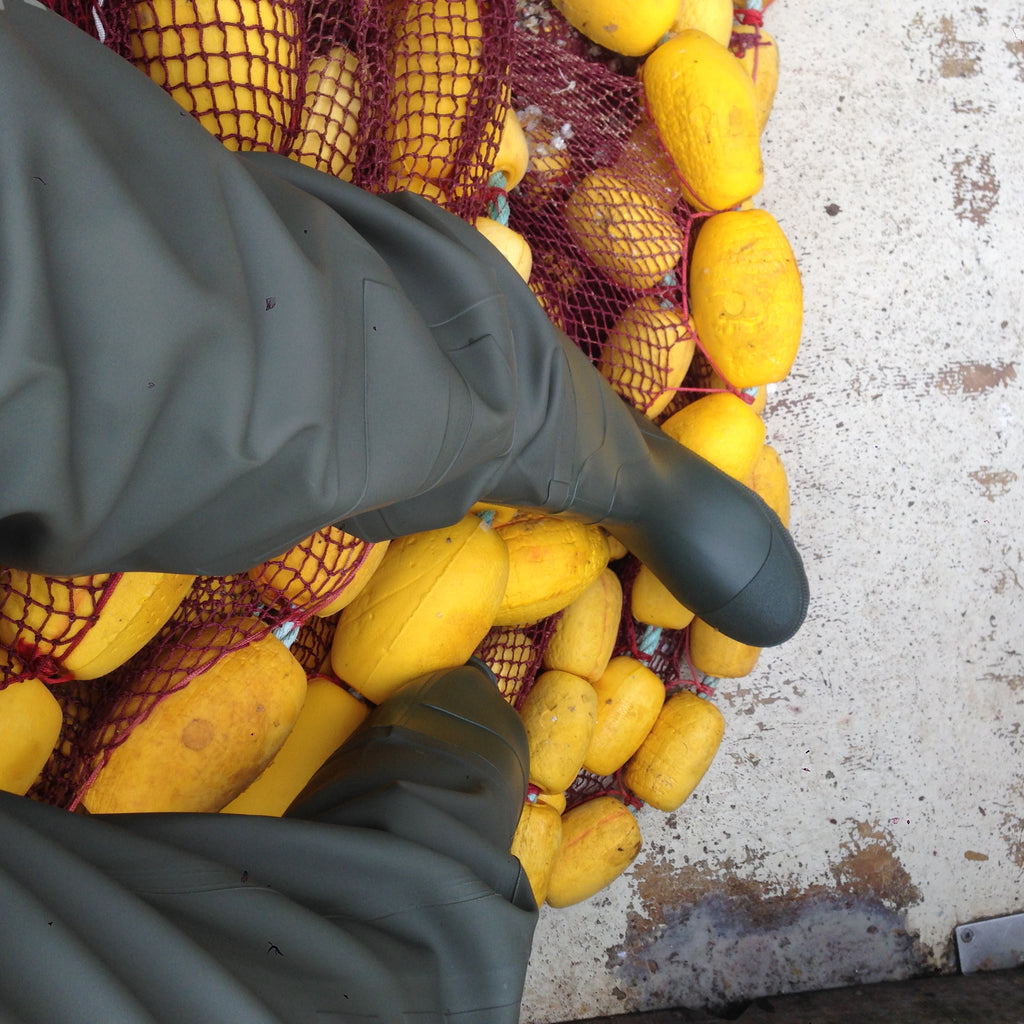
The atmosphere on the small boat is good from the start and we feel very welcome. Everyone readily gives information and explains to us in detail how everything works. And so we leave the bay – after quickly refueling and loading ice – with a still blue sky and some sunshine. The sea seems calm and I still cannot imagine that it will get wilder later. But as soon as we leave the bay, Pierrot also warns that it will start to rock now. And he is right: as soon as we venture out to the open sea, the waves roll and pile up to about 1.70m. The small nutshell takes every wave with it, plunges into its troughs and rides up its slopes. The boat not only rocks up and down, but also from left to right and I am glad that all the fish tanks are well secured. Pierrot sits drinking tea on his captain's chair in the wheelhouse and nothing more is seen of the crew: they have withdrawn into the cabins in the hull of the ship, where probably none of us four newcomers would last even a second. We stare at the horizon and try our best to keep our composure. If these comparatively small waves already have such an effect, I am really glad that we did not insist on an outing on one of the previous days. And I am grateful for my rubber boots!
After about an hour and a half – the sun has already almost completely disappeared – Pierrot discovers a large patch on his sonar at the suspected location that he has been heading to for the last few days. He suspects it could be a sardine school. Just as one of the ship's boys is explaining to me the principle of "pêche à la bolinche" (the traditional Breton way of fishing with the help of a special net), the keyword "boué!" (buoy) also echoes through the night. From then on, everything happens very quickly and before we know it, the first silver sardines are already wriggling in the net.
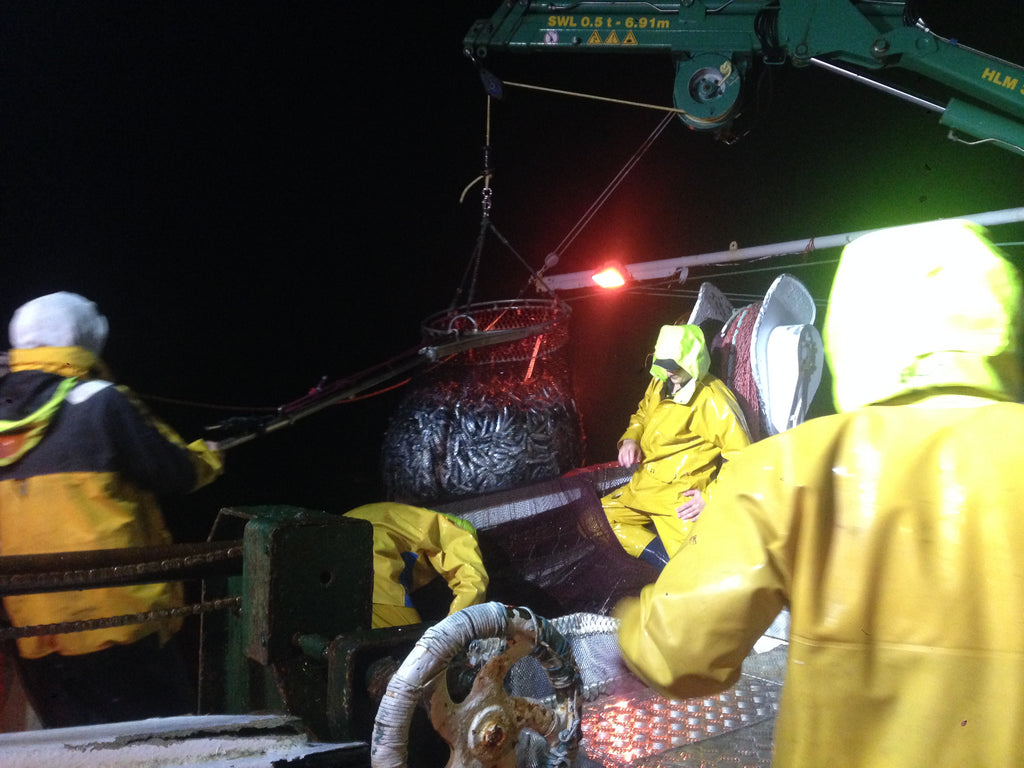

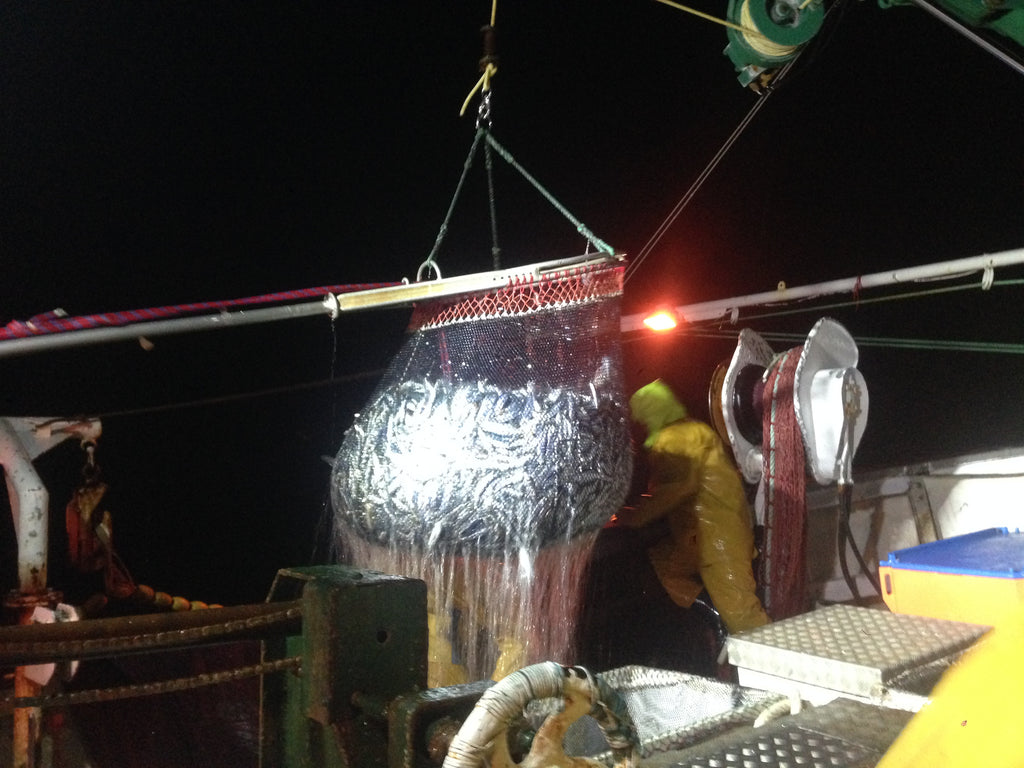
With just one go, "we" catch 5 or 6 tons of sardines of considerable size this evening So exactly no one knows that afterwards ... About 600 kilos of them are still sold in the night for 2 - 3 € per kilo to local fishmongers. The rest goes to the wholesaler and the canneries in the early morning for 0.75 €. Half of "our" catch will be bought by Jacques Gonidec and he will make his vintage sardines from it.
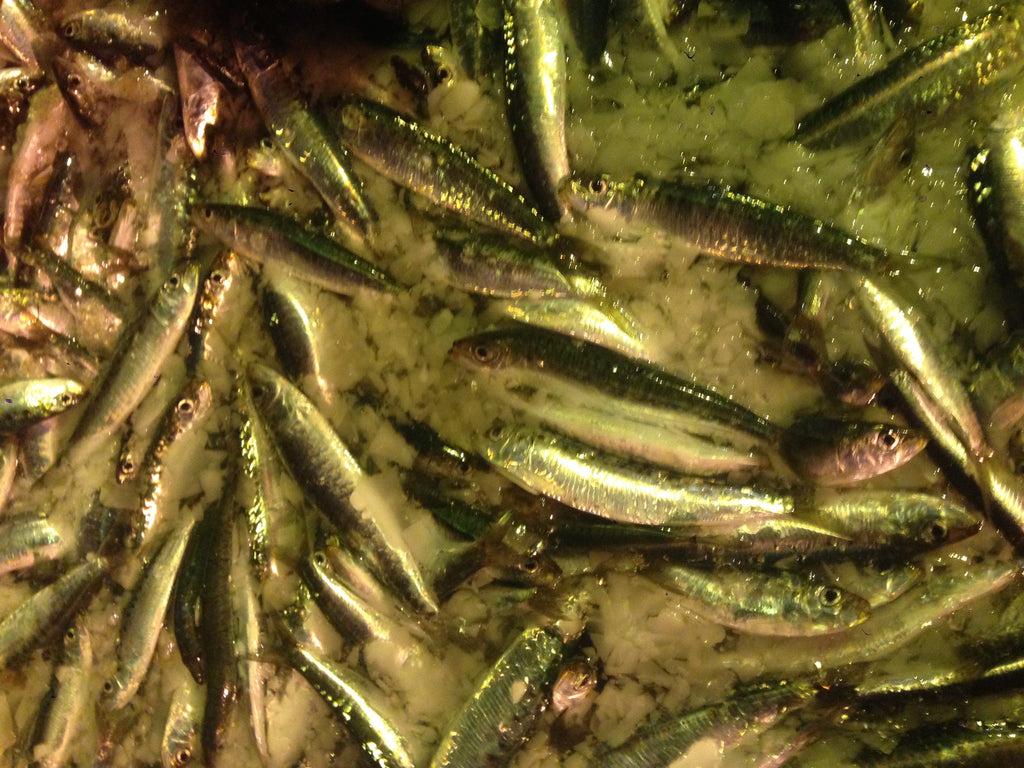
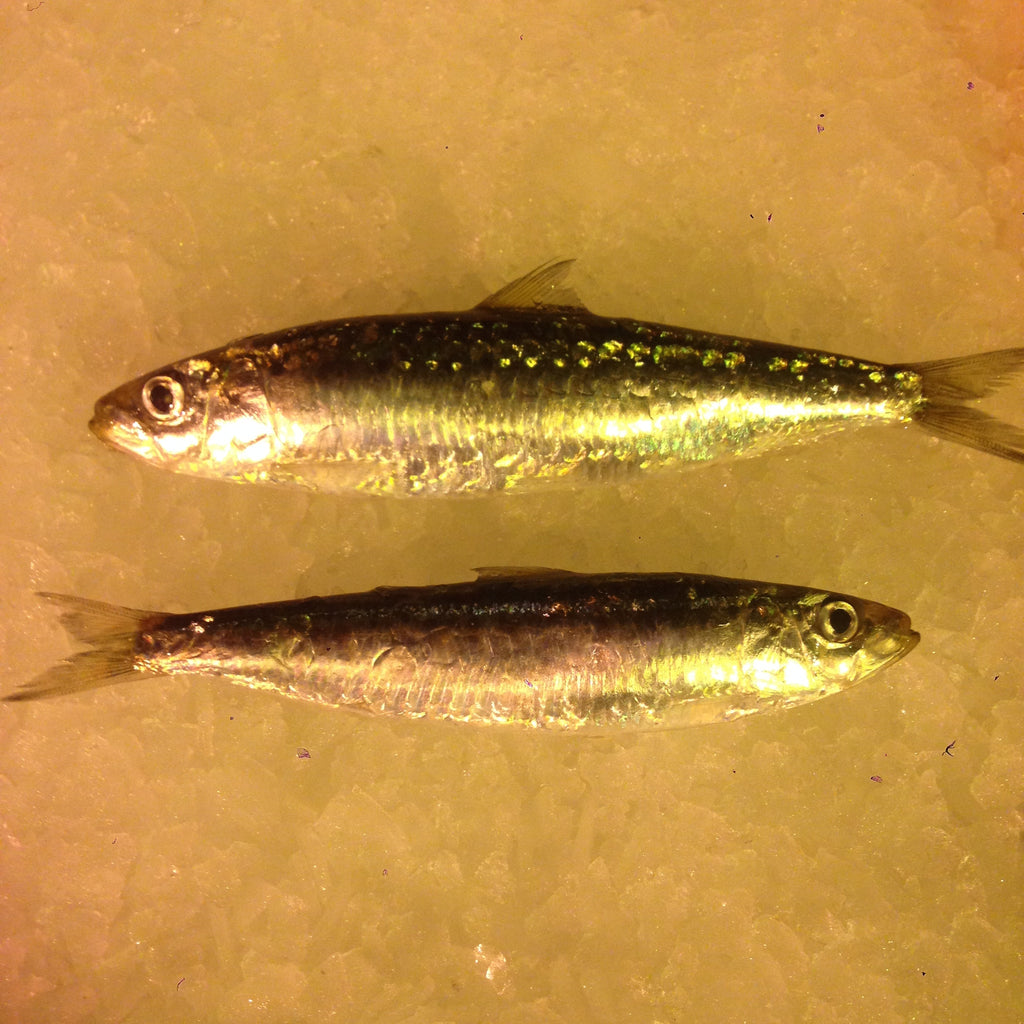
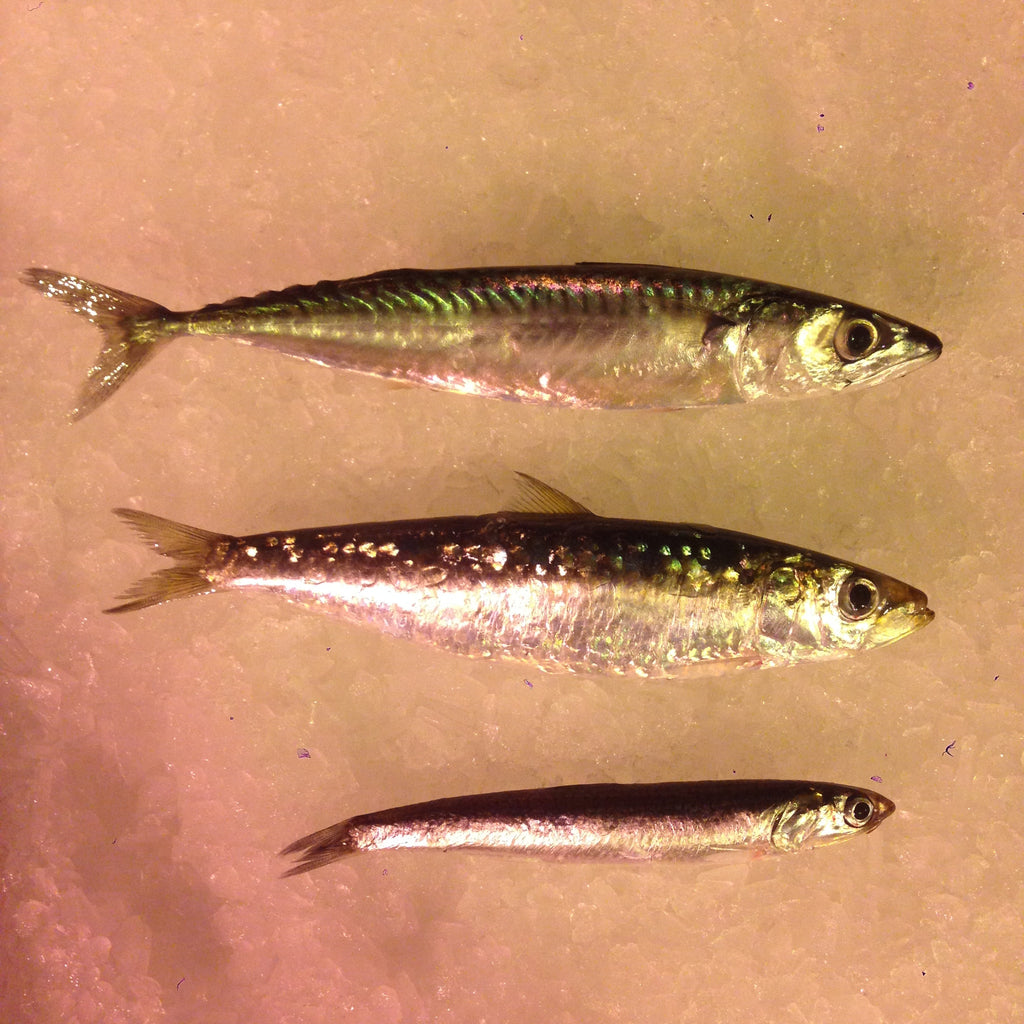
Excursion: La pêche à la bolinche
This type of fishing is a Breton tradition that allows for gentle fishing almost without bycatch and does not destroy the seabed. The net is set up like a large, wide band, on one side of which floats are attached and on the other side heavy iron rings, through which the net sinks up to 40 meters deep. On these rings, ropes are also attached at both ends, with which the net is closed at the bottom. One end of the net is fixed to the boat, at the other end a buoy is attached. This is thrown into the water when a sardine school appears on the sonar. Then the boat makes a quick circle, so that the net slides into the water and pulls together – around the catch. Now the full net can be pulled up, until the fishermen with the help of a small crane and a small net, which works on the same principle, can scoop the fish out of the net like with a ladle and transfer them on board into ice-water tanks.

The net in numbers:
- Dimensions: 330x83m
- Reachable depth: 40m
- Cost: approx. 30,000€
- Weight: 1.5t
Exhausted, happy, hungry and a little wobbly on our legs, we arrive back at the port around midnight. Now it is time to say goodbye to Pierrot and his boys. But maybe the goodbye will not last all that long, because together with my father and my sister we are already planning a joint trip through the canneries in June – from Concarneau (Gonidec, Les Mouettes d'Arvor) via Quiberon (La Quiberonnaise and La Belle-Iloise) to Saint-Gilles-Croix-de-Vie (La Perle des Dieux). We will surely also make a detour to the port of Lorient, to see if Pierrot is still sitting at the helm and takes us three landlubbers on board again ...
- - -
A few more impressions:

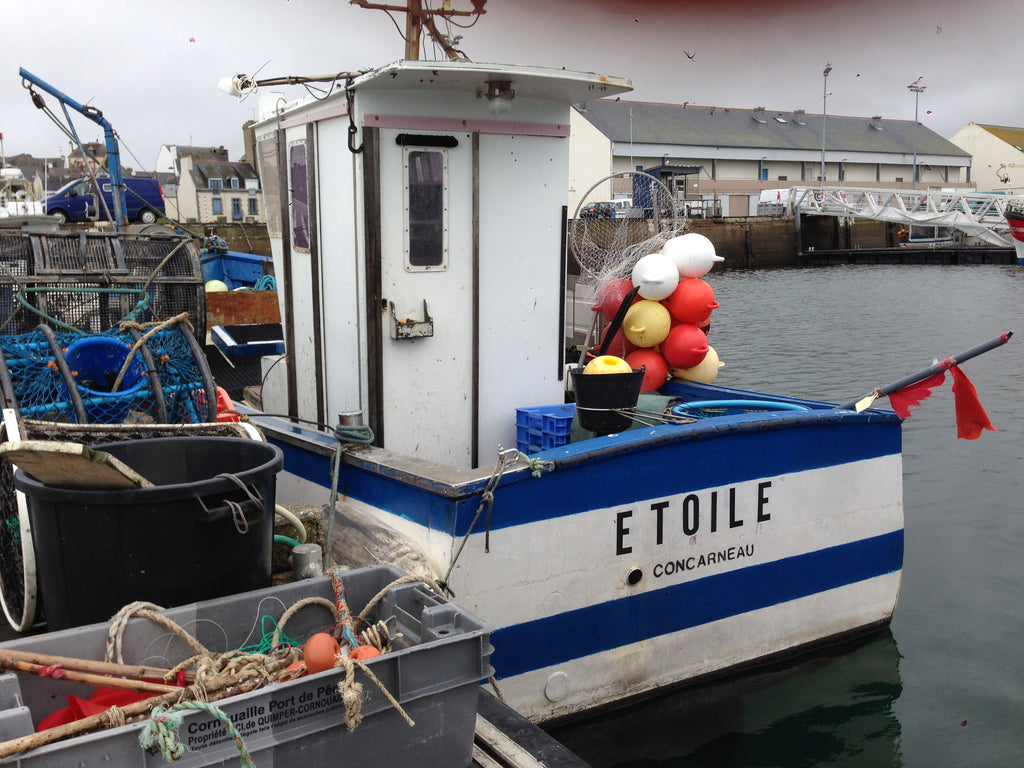


For everyone who prefers watching to reading, here is a short film about the trip:

